
The onslaught of Chinese mobile brands is virtually obliterating Indian brands, especially in terms of value. According to industry estimates based on excise and Custom duty trends, the value share of Indian brands (across smartphones and feature phones, operator phone sales - which is mostly Jio phones - and the value of phones smuggled into the country) has dropped to a mere 1.2 per cent in January-October 2021 compared to 25.4 per cent in the calendar year 2015. In the same period, the Chinese have established their domination, hitting a value share of 64.5 per cent, up from 17.8 per cent.

Of the 23 companies, eight have raised funds after Shark Tank India.

Ajit Mishra, vice president, Research, Religare Broking, answers your queries.
Chinese giant Xiaomi is going for the premium segment with a view to grabbing market share in the Rs 20,000 to Rs 50,000 smart phone market as well as having offerings up to Rs 70,000 where players like One Plus, Samsung, Vivo and Apple are key players. "Two years ago, the Rs 20,000 plus smart phone market which is considered premium in India was very small. "Out of every 100 phones sold, only 10 were above this price mark. "However, in the last two years, it suddenly grew and we thought it was big enough for us to focus on now," said Manu Kumar Jain, managing director, Xiaomi India.

It has hiked prices of diesel variants of Ciaz and Ertiga models with smart hybrid technology

The Telecom Regulatory Authority of India (Trai) has directed the Cellular Operators Association of India (COAI) to make a presentation detailing the pros and cons of the controversial Indian 5G standard, also known as 5Gi, which the government has been pushing for. The move comes after serious differences emerged among telcos with regard to the technology's efficacy and implementation.

He said COVID-19 can be a catalyst towards the adoption of digital technologies in health and education and drive change in a way that even venture capital funds have not achieved despite pouring billions in investments.

The race to commercialise driverless cars is far from over with experts predicting that a fully autonomous car will not hit the market until 2020 or later

An increasing number of hiring managers are opting for video conferencing platforms to know the candidates, explains Narayan Bhargava, chairman and managing director, Calibehr.

The role of the youth is very important in achieving the goal of 'ease of living' to give a better life to the poor, he told students.

On a cloudy Monday this month, Mohammed Irshad flew from Kochi to Gurugram to attend an exclusive investor networking event. Among a handful of founders selected for the event, Irshad was to pitch his peer-to-peer learning start-up Notespaedia for funding in front of top venture capital investors such as AngelBay, Elevation Capital, and Inflection Point Ventures. He failed to woo them, but the feisty entrepreneur was determined to continue his hunt.

From providing food and succour to pavement dwellers to helping the elderY in times of need, Dinesh Saravanan has been a godsend to the needy.

Reliance Industries chairman Mukesh Ambani on Thursday said Jio and Google have jointly developed a power-packed and affordable smartphone 'JioPhone Next', which will be available in the market from September 10. Ambani promised that JioPhone Next will be the most affordable smartphone not just in India but globally. Speaking at RIL's annual general meeting, Ambani asserted that an ultra-affordable 4G smartphone is essential to make India '2G-mukt' (free of 2G).

A new XUV, a new logo, and a big bang at the launch! Mahindra revealed its keenly-awaited XUV700 in Chennai on Saturday.

Nikunj Saraf, Vice President Choice Wealth, will answers your queries.

Google has announced a slew of new features including new privacy settings, AI tools and release of the first beta of Android 12 that will become part of its products over the course of the year. Kicking off Google I/O 2021 in a virtual format from the Mountain View campus, Google CEO Sundar Pichai also announced additions to Google Workspace that will enable richer collaboration, especially in view of the pandemic that has driven enterprises across the globe to embrace remote working solutions. Pichai said that COVID-19 has deeply affected every community over the past year, and "places like Brazil, and my home country of India, are now going through their most difficult moments yet".

It is eyeing the transportation and infrastructure modernisation opportunity in the country, expected to attract $500 billion in investment over the next five years.

Businesses of various scales can improve productivity and affordability of their products and services by building tech intensity, Microsoft CEO Satya Nadella has said. Nadella noted that organisations globally are undergoing digital transformation amid the COVID pandemic, and that trends like hybrid work, hyperconnected business and multi-cloud environments require "a boundaryless digital ecosystem where trust between different parties needs to be established in real-time". "Digital technology is a powerful deflationary force in an inflationary economy. Businesses - small and large - can improve their productivity as well as the affordability of their products and services by building tech intensity," he said.

Markets regulator Sebi's proposal of treating all orders emanating from application programming interface (API) as algorithmic or algo order can restrict the growth of such trading in India, brokerage houses said on Monday. In market parlance, algo trading refers to any order that is generated using automated execution logic. The algo trading system automatically monitors the live stock prices and initiates an order when the given criteria are met.

Tata Communications has invested around Rs 6.5 billion in developing its IoT business, which is being managed by some 75 executives over the past three years.

In a chat on rediff.com, Feroze Azeez offered valuable tips.
ITC has extensively reset its strategy and will explore opportunities to craft disruptive business models to set up structural drivers helmed by digital and sustainability for its next horizon of growth and make the company future-ready, chairman Sanjiv Puri said on Wednesday. The company is pursuing an accelerated journey to build a dynamic utureTech' enterprise by investing in cutting-edge digital technologies to shape a new paradigm of competitiveness, create innovative business models and tap newer opportunities, he said while addressing shareholders at ITC's virtual annual general meeting. As part of the next horizon vision, the company is "proactively exploring inorganic opportunities" even as it has shrunk "business segments that were incongruent to our growth aspirations, such as the Lifestyle Retailing Business" while the existing growth platforms comprising megabrands will be scaled up and fortified.

Akshat Bansal's gender neutral collection repurposed marine plastic waste into fluid designs.

A lot of mid and small-caps are in the bubble zone and command high valuation and have corrected sharply.

'The wise men learn lessons in war.' 'The smart men learn lessons from others, it's only the foolish who learn the wrong lesson.'

One of the biggest lessons for cities fighting the Covid-19 pandemic has been the criticality of access to data. Mumbai, which has shown significant success in managing the second wave of the pandemic, is a case in point, reports Shivani Shinde.

Rediff.com's Ashish Narsale presents a list of gadgets that will fit your budget and instantly impress your bae.

The Asian Development Bank (ADB) on Monday said it has approved a loan of $125 million (around Rs 938 crore) for water supply and sanitation projects in Uttarakhand. The funds will be utilised to improve access to quality water supply and sanitation services in the Himalayan state, ADB said in a release. Under this project, 136 kilometres of water pipe system will be constructed to replace defective water networks in South Dehradun. This will ensure reliable and continuous water supply, benefitting an estimated 40,000 people, including 4,000 urban poor and vulnerable groups.

How many of us really read about the company ahead of a job interview?
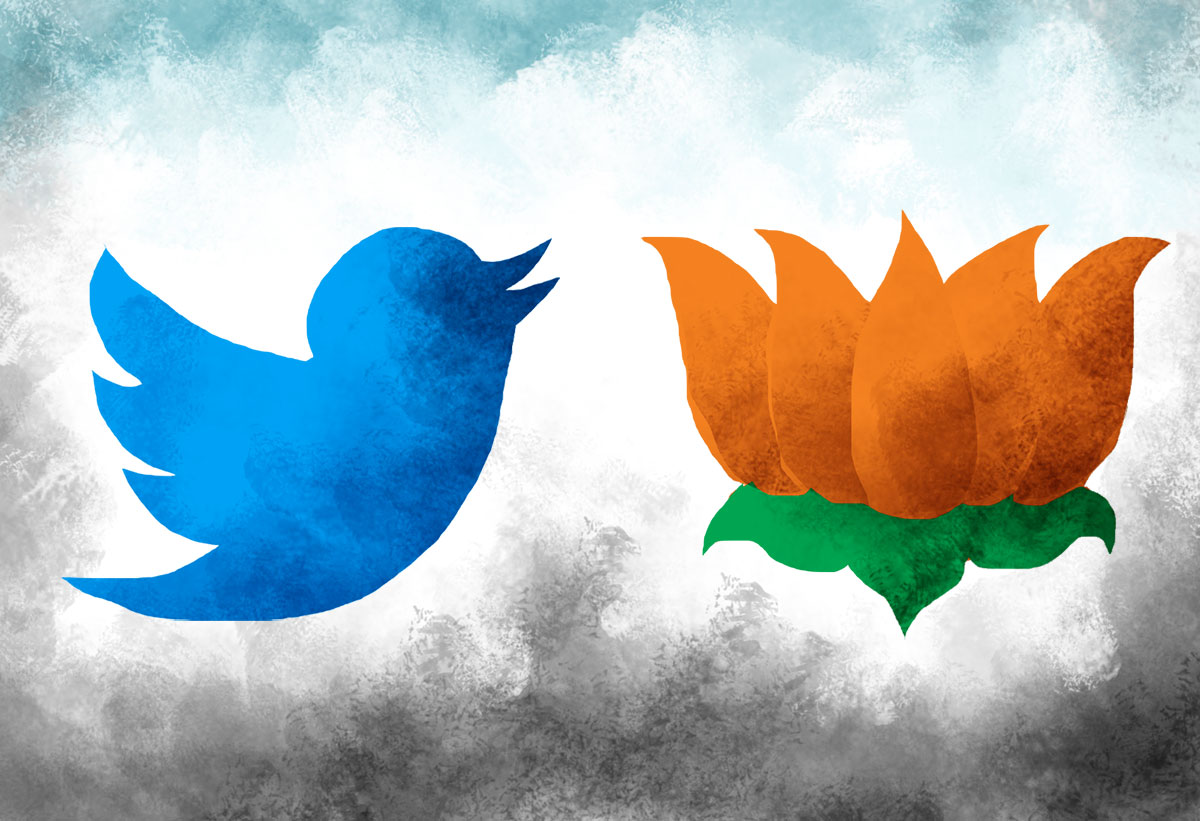
It was amusing to hear Minister Jaishankar's argument of tech companies being influential non-State actors. If only he looked at his own party before saying what he did, notes Shyam G Menon.

The prime minister also stressed on the need to transform the landscape of Indian science, technology and innovation, as he assured that the government will ensure the 'Ease of doing Science' and effectively using information technology to reduce red tape.

Nikunj Saraf, Vice President Choice Wealth, answers your queries.

'We have 25,000 private hospitals participating in this exercise and if each of these hospitals does 200 vaccinations per day, that makes it 50 lakhs.'

Has Steve Jobs' handpicked successor inherited the magic touch or is Apple's winning streak coming to an end?

Prime Minister Narendra Modi on Friday flagged off the Gandhinagar-Mumbai Vande Bharat Express semi-high speed train.

On the other hand, the Yogi Adityanath government has 'completed nine lakh houses under the scheme and 14 lakh are under construction', Modi said, reeling out comparative figures.

With some of the world's most amazing gadgets, the 2015 International CES kicked off on January 6 promising a fantastic show with more than 3,600 exhibitors.

In the high profile co-location case, markets regulator Sebi on Wednesday imposed a penalty of Rs 1 crore on the NSE for failing to provide a level-playing field for trading members subscribing to its tick-by-tick (TBT) data feed system. In addition, the regulator levied a fine of Rs 25 lakh each on NSE's former managing directors and chief executive officers Chitra Ramakrishna and Ravi Narain. Alleged lapses in high-frequency trading offered through NSE's co-location facility came under the scanner of the watchdog after a complaint was filed in 2015.

As remarkable as DRDO's contribution in containing and treating COVID-19 has been, its success over the last 15 months has been in its primary role of developing conventional defence equipment and technologies.

In the era of the fourth industrial revolution, mere tinkering with existing government procedures will not enhance India's economic competitiveness, says Pranjal Sharma.
